
Chars Livelihoods Program
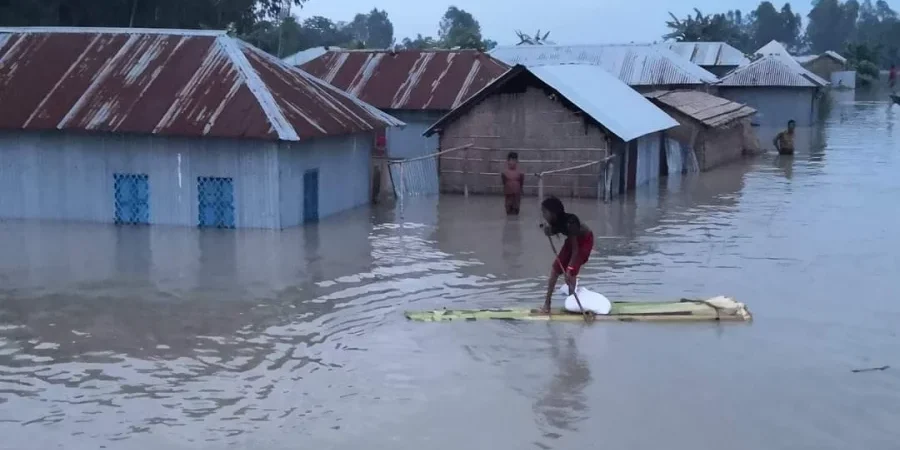
OUR WORK Chars Livelihoods Program AID-COMILLA implements the largest development project in Bangladesh period covering July 2007 to May 2016 titled Chars Livelihoods Programme (CLP) with funding support from DFID / UKAid / AusAid in Kurigram District Escaping the cycle of poverty is especially difficult in the char context of Bangladesh. Households not only need to withstand environmental challenges, they also have to carve out a livelihood in a place where access to markets is difficult. The poorest households are susceptible to the effects of the annual floods, which can destroy their homes and deprive them of nearly all their possessions. In addition, their usual source of income – agricultural day labour – has seasonal fluctuations in demand, so there are regular times when there is not enough work. Besides lacking adequate food, housing and land, the geographical isolation also means that char-dwellers often do not get access to basic social safety nets or health and education services. Women on the chars face an additional set of challenges because social norms are patriarchal, opportunities for education are limited and they have little control over family finances or decision-making. AID-COMILLA-CLP’s programme focused on improving livelihoods; food security; water, sanitation and hygiene practices; nutrition; and building women’s empowerment and resilience. AID-COMILLA-CLP’s support was largely provided to adult females in the form of an integrated package. At the end of the 18 months of assistance, AID-COMILLA-CLP aimed for participants to have “graduated” or moved out of extreme poverty. A cornerstone of AID-COMILLA-CLP programme was the provision of an asset that could generate an income. Households were able to use the initial asset to gradually accumulate further income-generating assets, typically livestock and land. These provided diversified incomes for participants and decreased their reliance on wage labour. In addition, by helping to move homesteads above the flood level by building raised plinths, AID-COMILLA-CLP was able to help provide residents with greater resilience to environmental shocks. The Programme’s goals sought to address a number of vulnerabilities across different dimensions: physical, economic, It was inevitable that certain challenges would arise. The set of Lessons Learnt Briefs developed by AID-COMILLA-CLP cover a vast range of activities and take a hard look internally at many of the Programme’s operations. While naturally not an exhaustive investigation of the entire range of AID-COMILLA-CLP activities and impacts, the collection of Briefs focuses on a series of issues related to selecting extreme-poor participants and developing specific programmes to cater to their needs; monitoring and assessing success across certain programmes and priorities; managing internal corporate structures and systems; and evaluating the long-term ramifications of AID-COMILLA-CLP’s work. AID-COMILLA Working Area Under AID-COMILLA-CLP: Nageshawri, Fulbari & Bhurunghamari Upazila of Kurigram District Beneficiaries Covered by AID-COMILLA: Our latest, and final, report on the graduation rates of all of our cohorts showed that AID-COMILLA-CLP beneficiary not only met our target, we exceeded it. Panel sample surveys revealed that 89.7% of AID-COMILLA-CLP households graduated. That’s the equivalent of 6,234 households. Selecting Participants & Measuring Success Brifes: Selecting the right participants is one of the core challenges for any poverty reduction programme because it determines how e_ciently the investment reaches the targeted population. It is important, therefore, to examine the practical aspects of establishing criteria for targeting beneficiaries and selecting participants. At the same time, developing a set of indicators to measure graduation can be an integral part of estimating success, not only for the programme’s donors but also its participants. The credibility and effectiveness of development efforts is challenged when resources fail to reach those most in need, so well-resourced and well-managed monitoring and evaluation systems are essential to monitor progress and outputs. This subset of Briefs examines how, in some cases, definitions needed to be broadened and adapted to local contexts. The Briefs also explore the challenges that were encountered when disagreements arose about such definitions and how delays were created when over-review became a phenomenon. It is clear from these briefs how important it is to collect reliable information, measure progress and conduct regular internal analysis and audits. Defining who to target and how to develop selection criteria: A set of selection criteria for defining extreme poverty that takes the wider context into consideration resulted in a finer selection of participants and greater acceptance in the communities than narrow, income-based criteria. Adopting a broader definition of “char” helped GoB and DFID reconcile their understandings of the targeted working area and allowed CLP to add more households in need to the programme. Targeting women served to increase women’s empowerment as well as providing an additional income to the household. CLP-1 & CLP 2 broadened inclusion to those not selected as direct participant households. This was done to reduce possible social division arising from supply of high value inputs to a targeted group within a population in which there is an undoubted, pervasive general need for support. A range of interventions like sanitation, behavioural change and disease control are best tackled with a community-wide approach. Objective: (1) To improve the livelihoods and food security status of Chars Dwellers (2) Reduced vulnerability of char dwellers will be achieved through targeted provision of infrastructure and services. (3) Poor women and men char dwellers will effectively sustain their livelihoods and engage in the local and national economy. (4) Poor char dwellers will be able to effectively influence local and national policy and service provision as citizens. (5) Private sectors will be involved to respond efficiently to opportunities for transacting the char dwellers as both producers and labourers. Activity and result: (1) Group Formation (2) Asset Transfer to the selected households with productive assets (3) Vegetable seed, timber sapling , cattle fodder seed supply and training (4) Cattle Management Training (5) Feed cost (6) Family maintenance stipends (7) Plinth raise (8) Toilet Installation (9) Community Fair (10) Exchange visit (11) Village Development Committee formed (13) Couple orientation ( 14) Value Chain / Enterprise Development Training on Improve Backyard Poultry Rearing (16) Value Chain / Enterprise Development Training on commercial fodder production with input
Explore More