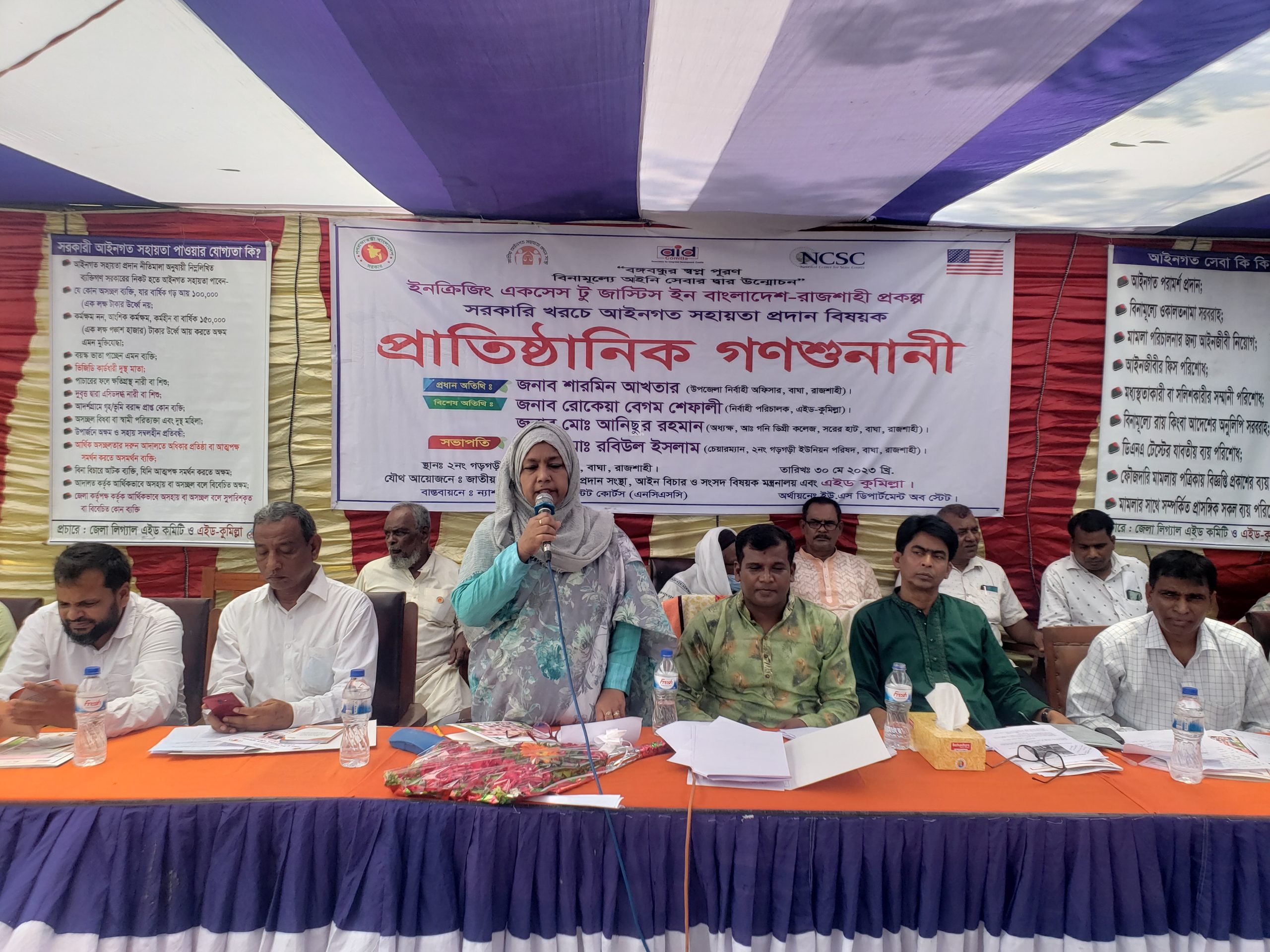
AID-COMILLA implements a number of projects on Promoting Peace and Justice (PPJ) / Justice for All (JFA) with funding support from Democracy International –USA (USAID Funding), National Center for State Courts-USA (US State Department funding), European Commission , MISEREOR-Germany in Comilla, Feni, Lakshmipur, Kurigram, Rangpur, Dinajpur and Rajshahi district since 2007
Major Activity but not limited to Arrange District Level Workshop in Comilla, Kurigram, Lakshmipur & Feni District, Orientation for UZLAC members at Upazila level, Orientation for UPLAC members at Union level, Sensitization session for UZLAC including issue areas such as TIP, GBV, VE etc., Sensitization session for DLAC including issue areas such as TIP, GBV, VE etc., Public hearing event, School Debate, Observation of National Legal Aid Day on April 28 at District and Upazila level, Facilitation of bi-monthly Union Legal Aid Committee (UPLAC) meeting at Union level for 55 union, Facilitation of bi-monthly Upazila Legal Aid Committee (UZLAC) meeting at Upazila level for 05 Upazila, Courtyard meeting at ward level involving all citizens (male-female), printing of IEC/BCC materials and distribution
Promoting peace and justice in Bangladesh is a vital endeavor for building a fair, inclusive, and harmonious society. Peace and justice are not only moral imperatives but also essential pillars for sustainable development and democratic governance. As a country with a rich cultural heritage and a diverse population, Bangladesh faces both opportunities and challenges in its journey toward a just and peaceful society.
A peaceful society is built upon the foundation of justice, where every citizen enjoys equal rights and protection under the law. In Bangladesh, access to justice remains a critical concern, particularly for marginalized communities such as women, ethnic minorities, and the poor. Strengthening the rule of law and ensuring timely and fair judicial processes are central to promoting peace and justice. Expanding legal aid, modernizing the judicial system, and promoting alternative dispute resolution can help make justice more accessible and efficient.
Good governance and accountability also play a crucial role in maintaining peace and justice. Transparent and accountable institutions reduce the risk of corruption, political unrest, and social inequality. Ensuring citizen participation in decision-making, empowering civil society, and strengthening oversight mechanisms help build trust between the government and the people. A just society cannot thrive without a governance system that is fair, inclusive, and responsible.
Social cohesion is another essential component of lasting peace. Bangladesh is home to diverse religious, ethnic, and cultural groups, and promoting mutual respect and tolerance among these communities is key to preventing conflict. Community-based peacebuilding initiatives, intercultural dialogue, and youth engagement can strengthen social harmony and reduce the potential for division and violence.
Furthermore, gender equality and the empowerment of marginalized groups are central to the pursuit of justice. Promoting women’s participation in decision-making, ensuring protection against gender-based violence, and creating opportunities for disadvantaged communities foster a more equitable and peaceful society. When everyone’s voice is heard and respected, peace becomes more sustainable.
Education also serves as a powerful tool in nurturing a culture of peace. Integrating peace and human rights education into curricula, promoting critical thinking, and encouraging dialogue can help shape future generations who value justice and non-violence. Media and digital platforms can further amplify messages of tolerance, equality, and mutual respect.
Bangladesh’s commitment to global frameworks, such as Sustainable Development Goal 16 — Peace, Justice and Strong Institutions — reflects its dedication to building a peaceful and just society. By upholding human rights, strengthening democratic institutions, and fostering cooperation with international partners, the country moves closer to achieving lasting peace.
Ultimately, promoting peace and justice in Bangladesh is not the responsibility of the government alone. It requires the collective effort of communities, civil society, the private sector, and individuals. By ensuring equality, fairness, and respect for human dignity, Bangladesh can build a society where peace is not merely the absence of conflict, but the presence of justice, harmony, and hope for all.