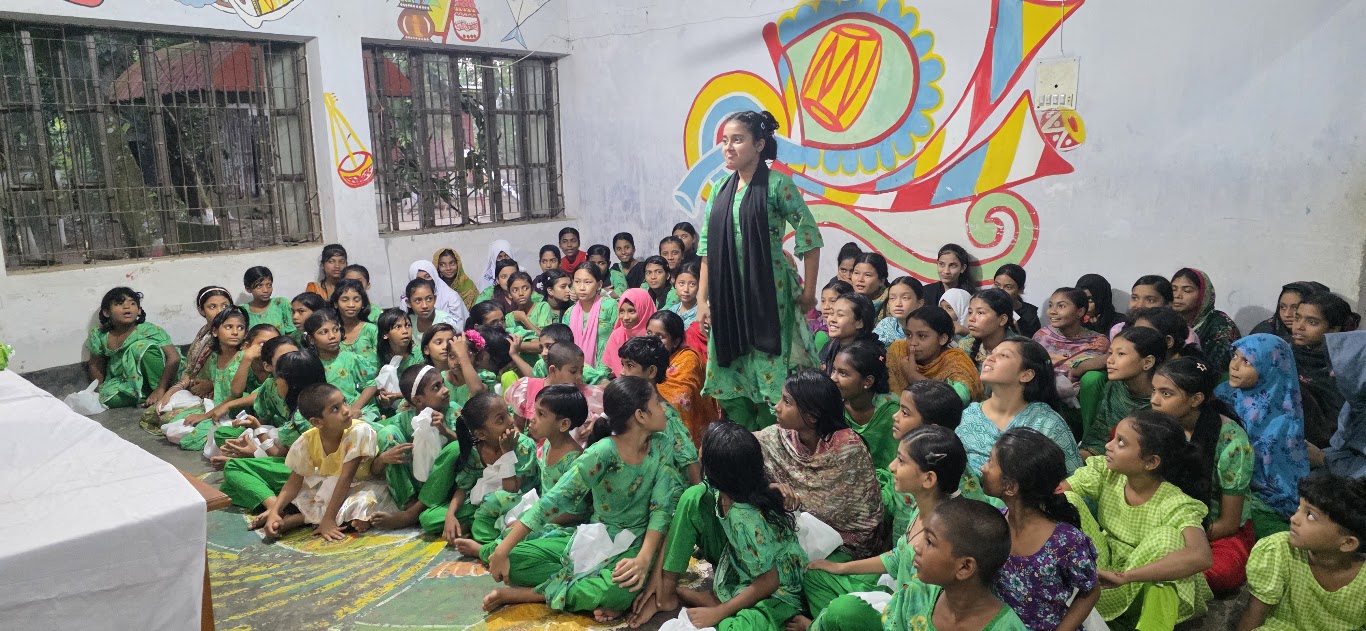
AID-COMILLA implements a project on Preventing Child Marriage in Tangail, Kurigram, Rangpur, Chapainowabgonj, Noagaon & Coxsbazar with funding support from WINROCK-International (USAID Funding) period covering January-August 2020
Preventing Child Marriage in Bangladesh
Child marriage, a deeply rooted social ill, continues to cast a shadow over the lives of countless young girls in Bangladesh. Despite progress in education and legal frameworks, the practice remains widespread, fueled by poverty, gender inequality, and long-standing cultural traditions. For many families, marrying off daughters at an early age is seen as a solution to financial hardships or a way to protect family honor, yet the consequences are profound and far-reaching.
The impact of child marriage is devastating. Girls are forced to abandon education, curtailing their dreams and potential. Early pregnancies pose serious health risks, often resulting in complications or even maternal and infant mortality. Emotionally, these young brides face isolation, domestic pressures, and a loss of childhood—a heavy burden carried long before they are ready. Economically, child marriage perpetuates cycles of poverty, as girls deprived of education have fewer opportunities for employment and independence.
Over the years, Bangladesh has taken significant steps to combat this issue. Laws such as the Child Marriage Restraint Act set the minimum age for marriage at eighteen for girls and twenty-one for boys. National action plans and policies emphasize education, legal enforcement, and awareness programs, aiming to shift social norms that condone early marriage. Civil society organizations, NGOs, and international agencies have been instrumental in raising awareness, empowering girls, and engaging communities to challenge harmful traditions.
Education emerges as one of the most effective tools in preventing child marriage. Girls who stay in school are more likely to delay marriage, gain knowledge about their rights, and aspire for better futures. Community engagement is equally critical, as changing entrenched social attitudes requires dialogue with parents, religious leaders, and adolescents themselves. Economic support for vulnerable families—through cash incentives or livelihood programs—further reduces the pressures that drive early marriage.
Although progress has been made, child marriage persists, especially in rural and economically disadvantaged regions. The struggle to eradicate it is ongoing, demanding a holistic approach that combines legal enforcement, education, economic empowerment, and cultural transformation. Preventing child marriage is not just a matter of policy; it is a moral imperative to protect the rights, health, and dignity of Bangladesh’s daughters, and to ensure that every girl has the chance to grow, learn, and thrive.