AID-COMILLA implements Grater Noakhali Aquaculture Extension Project with the funding support from Royal Danish Embassy (DANIDA) , Dhaka Bangladesh Overview
Pond fisheries occupy a central place in the tapestry of Bangladesh’s rural life and economy. Interwoven with the rhythms of daily living, these waterbodies—small homestead ponds, larger village ponds, and community-managed reservoirs—are more than mere sources of food; they are vessels of livelihood, nutrition, and cultural heritage. Particularly in the southwestern regions, the tradition of pond fish culture has persisted for generations, evolving in response to environmental, economic, and technological shifts.
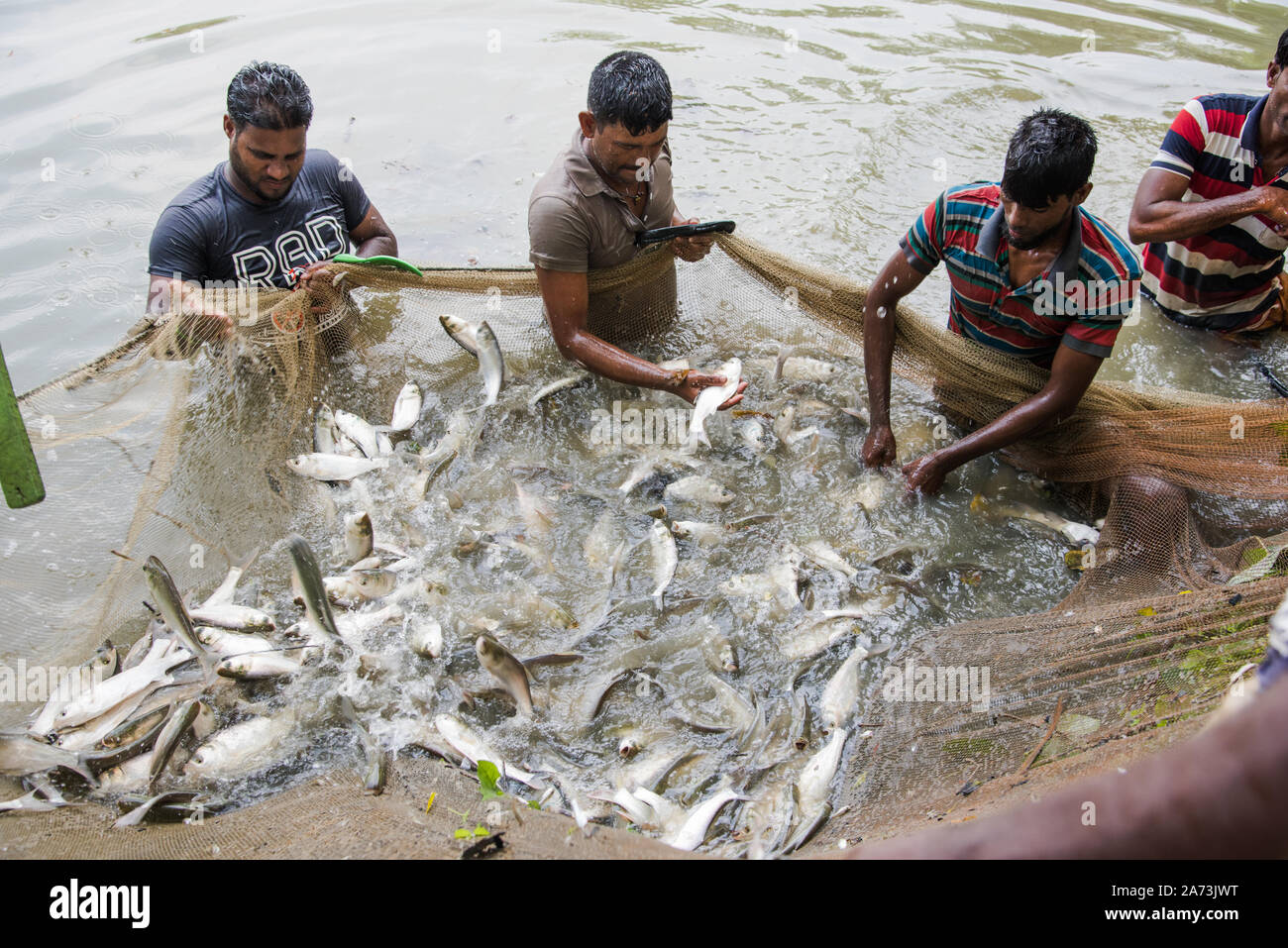
In recent decades, pond aquaculture has grown to account for nearly half of the country’s total aquaculture production. During the 2023–24 fiscal year, nearly 2.978 million metric tons of fish were harvested from ponds and other managed waterbodies, forming a backbone for both rural diets and income. The waters of Bangladesh’s ponds teem with a diversity of species—Tilapia, Pangas, Rui, Katla, Mrigal, Koi, Shing, and Pabda—each contributing uniquely to the ecological balance, household nutrition, and local economies.
The methods of pond culture reflect a blend of tradition and innovation. Most ponds are managed under extensive or semi-intensive systems, relying on locally available resources while gradually incorporating modern scientific techniques. Stocking densities are carefully maintained, and the nurturing of juvenile fish requires meticulous attention to water quality, feed, and seasonal changes. Innovations such as aquageoponics—where pond water enriched with fish nutrients nourishes vegetables—illustrate the creative adaptation of aquaculture to sustainable farming practices.
Pond fisheries are deeply interwoven with the socioeconomic fabric of Bangladesh. With over 4.27 million homestead ponds, nearly one-fifth of rural households rely on these waterbodies for supplemental income. For many families, fish harvested from ponds are not merely commodities but vital sources of protein, contributing directly to household nutrition and food security. These ponds also act as communal anchors, places of social interaction, cultural practice, and local identity.
Yet, the sector faces challenges. Environmental pressures—such as the overuse of fertilizers and pesticides, changing rainfall patterns, and rising salinity in coastal regions—pose risks to both yield and ecosystem health. Climate change looms as a persistent threat, compelling fish farmers to seek adaptive strategies. At the same time, the infusion of technology, training, and technical support from governmental and non-governmental organizations offers avenues for growth, resilience, and sustainability.
Pond fisheries, from the historic Dharmasagar Pond of Comilla, built in 1458, to the myriad small homestead ponds scattered across the countryside, narrate a story of human ingenuity and ecological partnership. They are living laboratories where age-old practices meet modern innovation, where sustenance and livelihood converge, and where the quiet waters of Bangladesh reflect both the nation’s heritage and its promise.
In essence, pond fisheries in Bangladesh are not merely a sector of aquaculture—they are a testament to the harmonious interplay of culture, economy, and ecology. Their future lies in the careful balance of tradition and technology, conservation and productivity, local knowledge and scientific innovation.