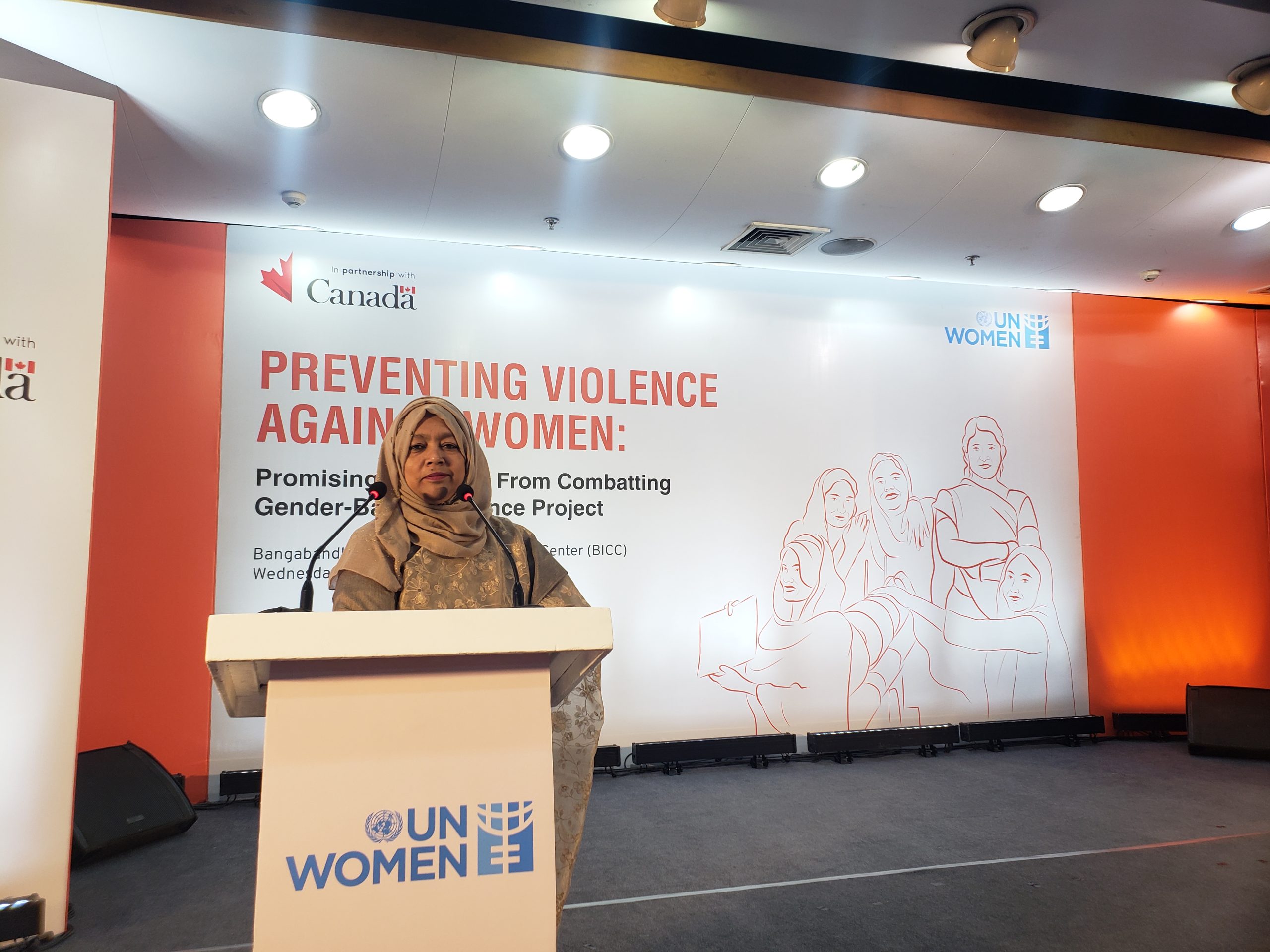
AID-COMILLA implements a number of projects on Combating Gender-Based Violence with funding support from Christian Aid-UK (UN women Funding) , NEAR Fund, International Rescue Committee-IRC etc in Comilla & Coxsbazar
Gender-Based Violence (GBV) remains a pervasive and deeply rooted human rights issue in Bangladesh, affecting millions of women and girls across all socio-economic groups. GBV refers to harmful acts directed at individuals based on their gender. It encompasses physical, sexual, emotional, and economic violence, as well as controlling behaviour, harassment, forced and child marriage, dowry-related abuse, and technology-facilitated violence. While GBV can affect anyone, women and girls bear the brunt due to entrenched patriarchal structures, discriminatory practices, and unequal power relations.
According to the 2024 national survey on Violence Against Women, approximately 76 percent of women in Bangladesh have experienced some form of intimate partner violence in their lifetime. Nearly half of the women surveyed reported experiencing such violence in the preceding twelve months. Physical and sexual violence by husbands remains particularly widespread, with over 54 percent of women affected at some point. The prevalence is even higher in disaster-prone regions, where vulnerability is exacerbated by poverty, displacement, and limited access to services. Moreover, a large proportion of survivors—over 60 percent—never disclose their experiences due to fear, stigma, and social pressure.
GBV in Bangladesh manifests in multiple forms. Intimate Partner Violence (IPV) is the most common, often characterized by physical assault, sexual coercion, psychological abuse, and economic control. Non-partner violence, including sexual harassment, assault, and rape, also persists in public spaces, workplaces, and educational institutions. Dowry-related abuse, child and forced marriage, and harmful cultural practices continue to pose serious threats to women’s safety and autonomy. In recent years, technology-facilitated violence has emerged as a growing concern, with online harassment, image-based abuse, and cyber threats increasingly reported by women and girls.
The drivers of GBV in Bangladesh are complex and interconnected. Deep-rooted cultural and social norms normalize male dominance and control, while early marriage significantly increases exposure to IPV. Economic dependency on male family members limits women’s ability to leave abusive situations. In rural and disaster-prone areas, geographic isolation further reduces access to support services and justice mechanisms. Weak law enforcement, limited awareness of rights, and widespread victim-blaming compound these challenges, creating an environment where violence is both under-reported and under-addressed.
Bangladesh has taken several legal and policy measures to combat GBV. Existing laws cover issues such as rape, sexual harassment, child marriage, and dowry-related violence. The government has also established the Multi-Sectoral Programme on Violence Against Women and created One-Stop Crisis Centers (OCCs) to provide medical, legal, and psychosocial support to survivors. Numerous non-governmental organizations and international development partners are actively engaged in prevention, protection, and advocacy initiatives. Despite these efforts, gaps remain in effective implementation, accessibility of services, and survivor-centered approaches.
Several structural challenges hinder progress. Social stigma prevents many survivors from seeking help, while institutional responses often lack sensitivity and efficiency. Rural-urban disparities in service provision limit access for marginalized populations. Moreover, emerging forms of violence, especially technology-based abuse, are not yet fully addressed within existing legal frameworks. These gaps highlight the urgent need for coordinated and holistic interventions.
Promising strategies include community-level awareness campaigns that challenge harmful gender norms and engage men and boys as allies, education programs that empower girls and delay child marriage, and the expansion of survivor-centered services, including legal aid, counselling, shelters, and mobile outreach units. Strengthening law enforcement through gender-sensitive training, improving data collection systems, and leveraging technology for prevention and reporting can also enhance GBV response mechanisms.
In conclusion, Gender-Based Violence in Bangladesh is both a symptom and a driver of gender inequality. While significant progress has been made through legislation, policy initiatives, and grassroots activism, persistent cultural norms, institutional weaknesses, and socio-economic barriers continue to sustain high levels of violence. Addressing GBV effectively requires a multi-dimensional approach—combining legal reform, service provision, community mobilization, and systemic change—to build a society where women and girls can live free from violence and discrimination.